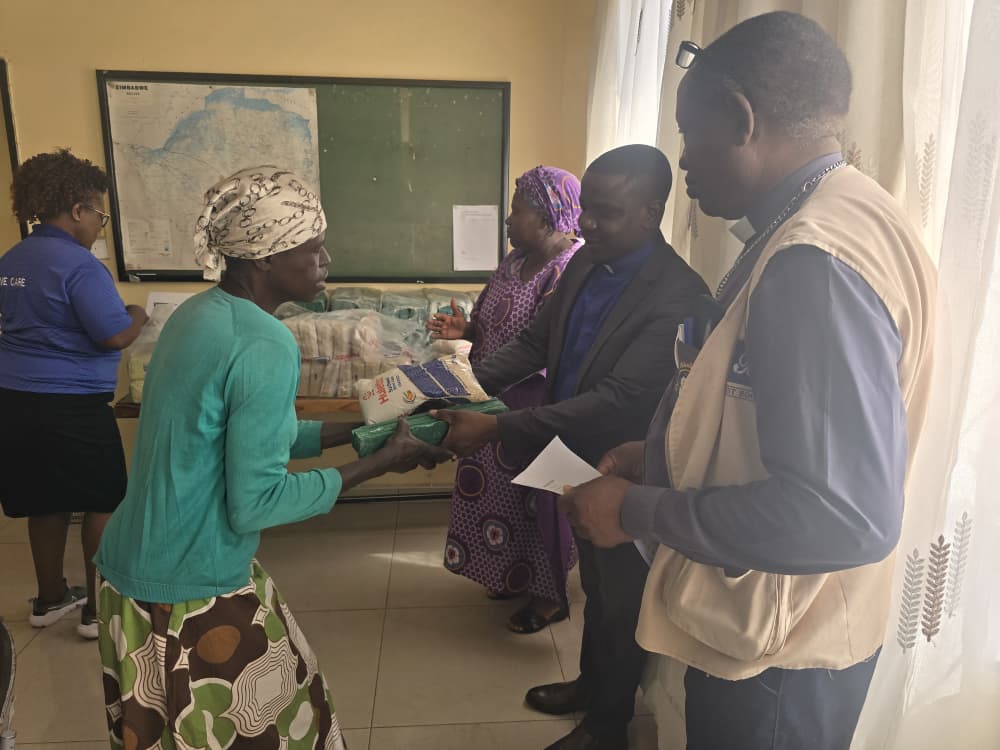
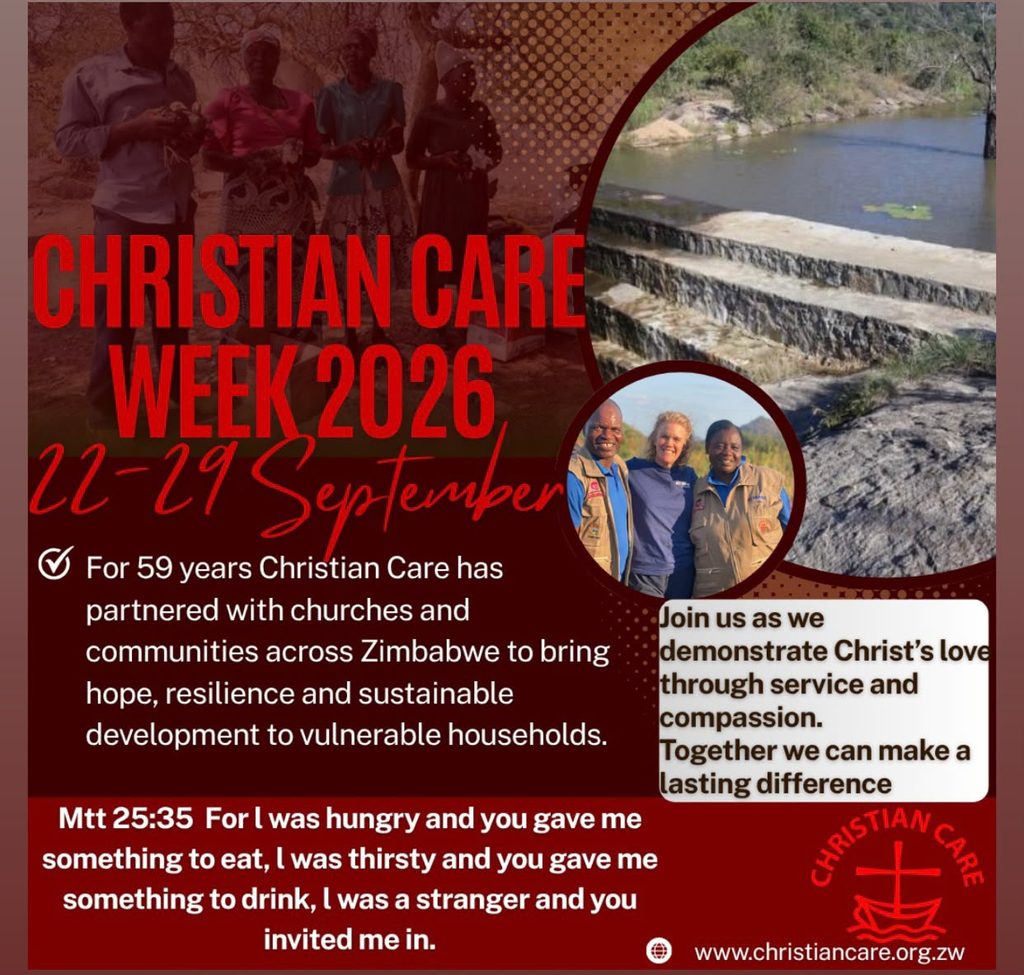
Gweru: As part of the organisation’s 59th anniversary celebrations during the Christian Care Week, Christian Care Zimbabwe’s Midlands Executives donated groceries to representatives of the Midlands Children Hope Centre.
“For I was hungry and you gave me something to eat, I was thirsty and you gave me something to drink, I was a stranger and you invited me in.” (Matthew 25:35)
Established in 1967 by the Zimbabwe Council of Churches, Christian Care has served vulnerable communities across Zimbabwe for 59 years through humanitarian relief, food security, water and sanitation, and livelihoods programmes
October is Breast Cancer Awareness Month, a time to raise awareness, encourage screening and stand with everyone affected by breast cancer. At Christian Care, we believe healthy communities are resilient communities, and that starts with knowledge and early action.
Breast cancer can affect women and men, and finding it early greatly improves the chances of successful treatment. We encourage everyone to:
•	Know your body and check your breasts regularly for any changes
•	See a health worker promptly if you notice a lump, swelling, skin changes, nipple discharge or persistent pain
•	Go for regular screening at your nearest clinic or hospital
•	Share what you know with your mother, sister, daughter, friend, colleague and neighbour
Fear and silence cost lives, but information and early detection save them. We stand in solidarity with survivors, those currently in treatment, families and caregivers, and we remember those we have lost.
Visit your nearest health facility this month and encourage someone you love to do the same.
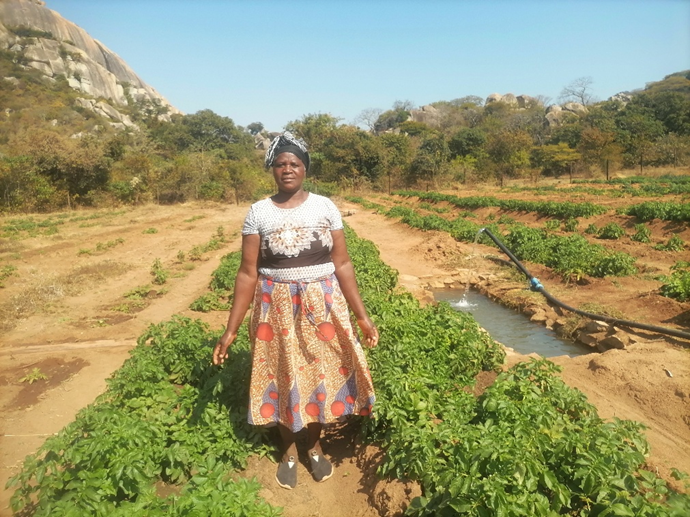
In the dry and challenging conditions of Natural Farming Region 5, Ward 31 of Rupinda Village in Bikita District, water scarcity once defined everyday life. For years, the 30-member Rupinda Garden group, made up of 29 women and 1 man, struggled to produce crops consistently. Farming was limited to the rainy season, harvests were poor, and the nearby Mukweture Wetland, located approximately three kilometres uphill, was increasingly degraded and vulnerable to destruction due to human activities and the effects of climate change.
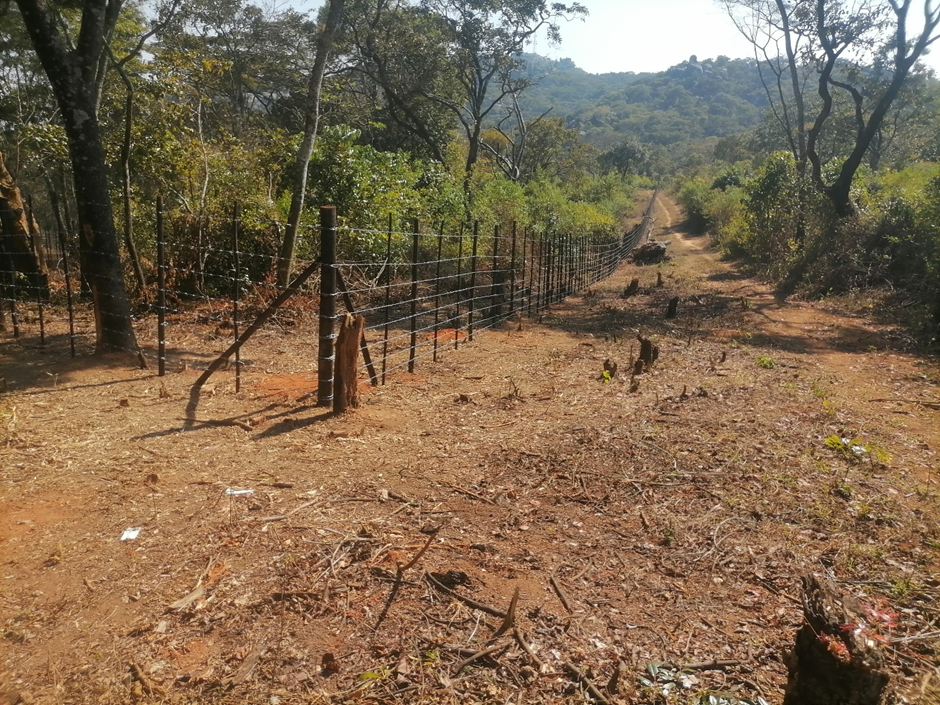
Today, that story has changed dramatically. Through support from Act for Peace and The Charitable Foundation, Christian Care implemented a transformative intervention to protect and restore the Mukweture Wetland. The initiative included fencing the wetland to safeguard it from degradation, constructing a weir to harvest and store water, and installing a three-kilometre pipeline that now supplies water to the two-hectare Rupinda Garden.
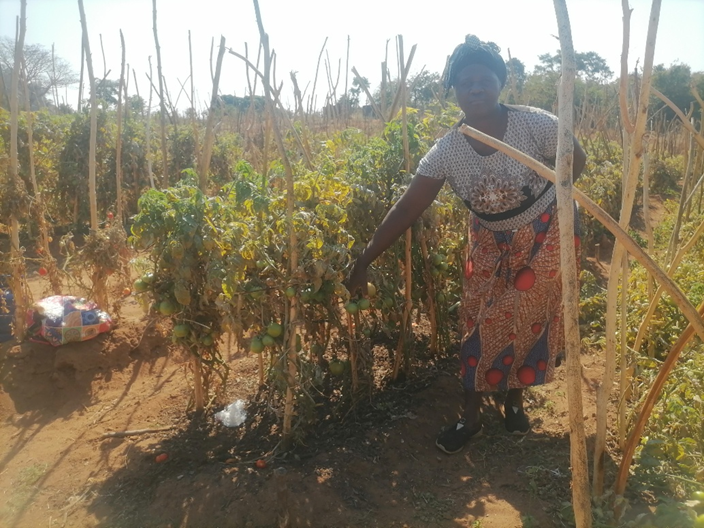
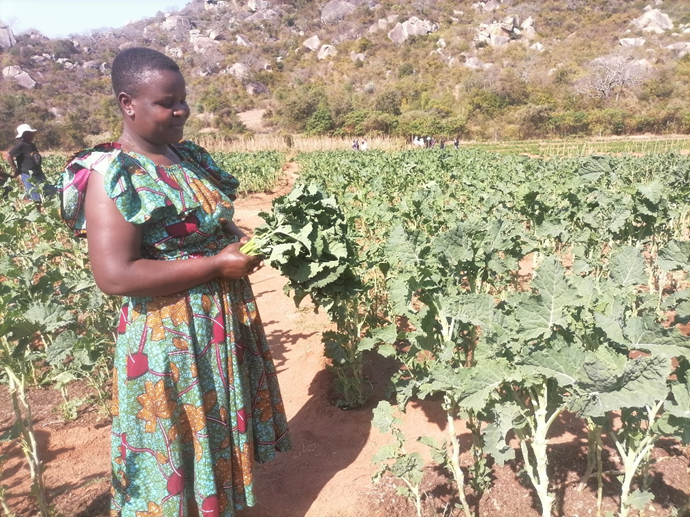
As a result, the garden has been transformed into a thriving, year-round agricultural enterprise. Members now grow a variety of horticultural crops including tomatoes, onions, covo, beans, green mealies, and potatoes throughout the year, providing both food for their families and produce for sale.
“Before Christian Care and partners intervened, we only grew crops during the rainy season. Now we harvest every month,” says Mrs. Joyce Mudzinganyama, Secretary of the Rupinda Garden.
The impact extends beyond agriculture. Agritex continues to provide technical extension and advisory services, helping farmers improve productivity and adopt sustainable farming practices. Households are earning income from the sale of fresh vegetables, savings have increased, and families are enjoying improved nutrition through regular access to diverse vegetables.
The community has also established strong local management structures. A dedicated committee, together with local leadership, oversees the irrigation system, while a portion of garden income is set aside for maintenance and repairs, ensuring long-term sustainability and ownership.
What was once a struggling seasonal garden has become a flourishing, women-led agribusiness. By protecting the Mukweture Wetland, the community secured more than water—they secured livelihoods, improved nutrition, and strengthened resilience against climate change.
Rupinda Garden stands as a powerful reminder that when wetlands are protected, communities thrive.
Harare, 30 September 2026: As part of Christian Care Week commemorations, Christian Care Zimbabwe donated groceries (flour,cooking oil, soap and rice). Tose Respite Care, a facility that cares for children living with severe disabilities.
The donation follows the organisation’s distribution of groceries to vulnerable beneficiaries in Bulawayo, another Christian Care Week initiative. Established in 1967 by the Zimbabwe Council of Churches, Christian Care works across the country in humanitarian relief, food security, water and sanitation, and livelihoods.
Bulawayo, 24 September 2026: As part of Christian Care Week commemorations, Christian Care Zimbabwe donated groceries to vulnerable beneficiaries in Bulawayo.
The donation, comprising flour, soap,cooking oil and sugar, benefited 50 households at Evangelical Lutheran Church in Zimbabwe (ELCZ) in Njube.
Christian Care Week is observed each year to reflect the organisation’s mission to serve the poor and disadvantaged. Established in 1967 by the Zimbabwe Council of Churches, Christian Care works across the country in humanitarian relief, food security, water and sanitation, and livelihoods.
On 22 September 1967, Christian Care was established by the Zimbabwe Council of Churches as the service arm of the churches. Nearly six decades later, we mark Christian Care Week (22–29 September) under the theme “59 Years of Faith, Resilience and Service: Sailing Forward in Hope.”
Our logo — a ship carrying the cross of Christ through turbulent waters — captures our journey. Since 1967, Christian Care has sailed through wars, droughts, displacement, disease outbreaks and economic hardship, yet by God’s grace we remain afloat.
Over 59 years, Christian Care and our partners have transformed more than 100,000 lives across Zimbabwe. Our impact includes:
•	80+ piped water schemes and 980+ boreholes
•	1,200+ latrines and 20,000+ sanitation and hygiene kits
•	21 weirs, 8 fenced wetlands, and 120+ nutrition gardens
•	Thousands of chickens, goats, cattle, rabbits and turkeys distributed to rebuild livelihoods
•	20 fishery projects
None of this would be possible without our member churches, communities, government, Act for Peace, The Charitable Foundation, UN agencies, and local and moreinternational partners.
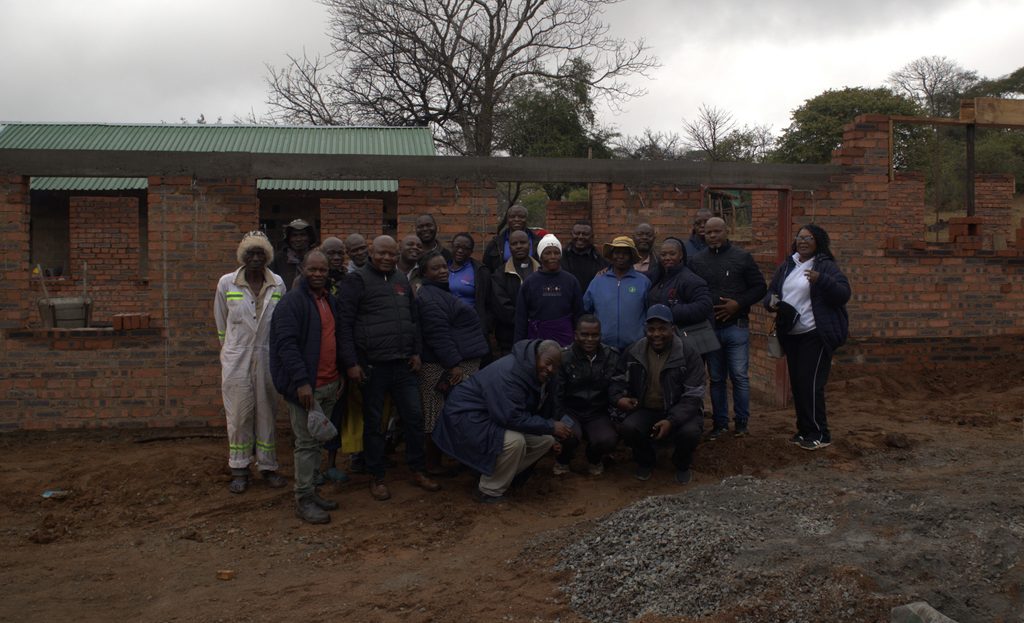
Christian Care Board representatives, joined by the secretariat, led by A/Chief of Party, recently undertook organisational support visits to project sites in Bikita and Chiredzi, reflecting the Board’s ongoing engagement in guiding the organisation’s programme delivery and its commitment to the communities Christian Care serves.
The visits gave the participating Board representatives a firsthand opportunity to provide organisational support to project teams, assess implementation progress, engage with staff and key stakeholders, and identify opportunities for continued collaboration.
In Bikita, the team was warmly welcomed by the community with song and a shared meal — a gesture that reflected the strength of the partnership built over years of collaboration. The delegation also toured the wetland project, gaining firsthand insight into the environmental and community-based work being carried out in the area.
The team then travelled to Chiredzi, where they visited the school supported under the Chitope Japanese Embassy project. There, Board representatives engaged directly with community members who have played a central role in the project’s success, learning more about its impact and the efforts needed to sustain it.
“The participation of our Board representatives in these visits reflects their deep commitment to the communities we serve,” said Sefelipelo Bhebhe, Acting Chief of Party. “The warmth of the welcome we received, and the dedication shown by these communities, strengthen our shared resolve to keep supporting these initiatives.”
Christian Care thanks its Board representatives for their continued oversight and hands-on engagement, and extends its gratitude to the communities of Bikita and Chiredzi for their hospitality and partnership.
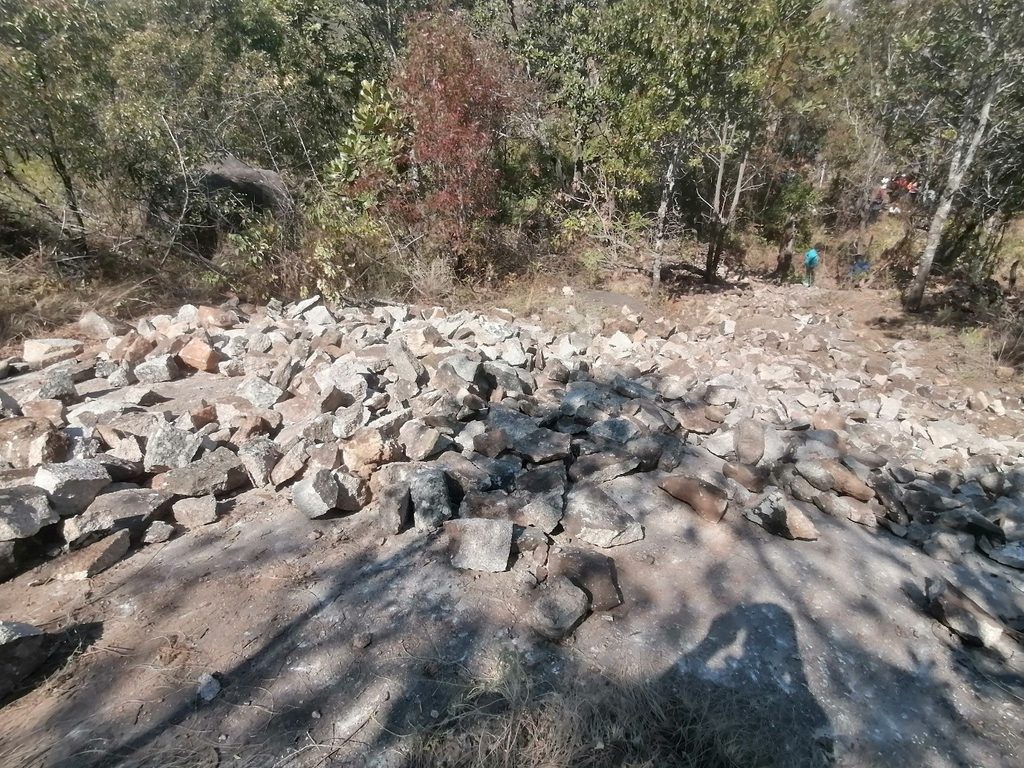
A few years ago, Chimanye Wetland in Bikita District ward 15 Museti area under Chief Mazungunye was just 7ha of degraded land. During dry years, the stream flow dried up leaving patched pools. Crops failed. Livestock walked long distance for water. When the El Nino was announced for the 2026 to 2027 agricultural season, fear spread in the community. “What will we eat? Where will the cattle drink?” people asked. The wetland was there, but no one knew how to use it. There was no water control, no training, and little cooperation between neighbours.
The multi sectorial collaboration of community and partners marks the turning point, things began to change. With support from the Government of Zimbabwe agriculture and environment advisory agents (EMA, RDC, Forestry and Agritex), Christian Care and funding from The Charitable Foundation (TCF), the community of Chimanye decided: “We will rehabilitate our wetland ourselves and build a weir downstream.”
The wetland (seven hactares) was successfully rehabilitated. It was a community based participatory approach well aligned with National Environmental Policy. Beyond crops, livestock and income, the wetland recharges groundwater, provides bee forage for honey, reduces erosion and gives a reliable water source for generations.
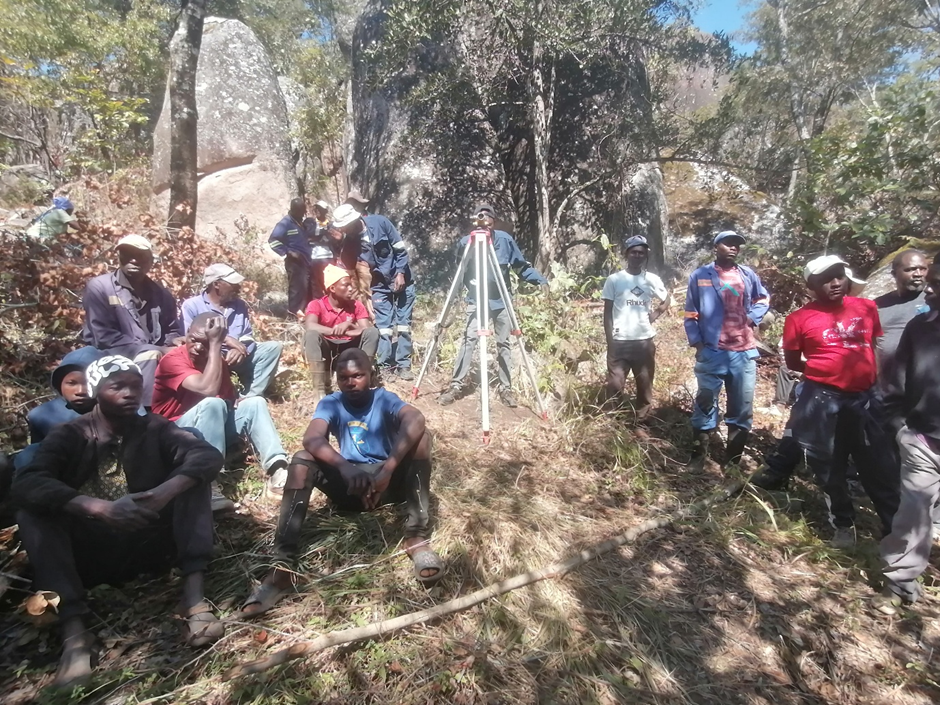
The Department of Mechanisation housed in Masvingo town approximately 140km from Chimanye came in and trained local builders on weir wall construction. It wasn’t just about stone and cement. It was about mind-set change. For the first time, men, women, and youth sat together, planned together and worked together.
“We learned that if we cooperate, we can solve our own problems, “said one community member (Lazarus Chiswa Chairperson). Today, a strong weir wall is set to stand downstream across Chimanye Wetland. With the weir holding water, the community will now be ready for the projected El Nino in 2026-2027. Even when rains fail, there will be water for gardens and livestock. More than six hectares of land is set to be irrigated benefiting more than one hundred households. That means increased income, vegetables in winter, maize in summer and food on tables all year.
Good coordination and cooperation between the community, government, Christian Care and TCF proved that development works best when we do it together. In the near future Chimanye will no longer wait for relief food. The weir will be more than a wall of stone. It is proof that with training, cooperation and support, a community can turn a wetland into wealth.
Story compiled by Taruberekera RN (Project Officer)
“Owning Our Future, Sustaining Christian Care Together”
The AGM brought together board members, partners, member churches, management, staff and esteemed stakeholders to reflect on the organization’s progress, discuss opportunities for growth and reaffirm our shared cooperation to serving vulnerable communities.
We extend our sincere appreciation to all delegates who participated and contributed to the meaningful discussions. Together, we remain committed to building a stronger Christian Care that continues to serve with compassion, integrity, and hope.
Christian Care successfully hosted its Regional Annual General Meetings (AGMs) in Masvingo and Matabeleland, bringing together representatives from member churches and organisational leadership to review progress, strengthen governance, and chart the way forward for the organisation.
These meetings reaffirmed Christian Care’s commitment to transparency, accountability, and collaborative leadership through its member churches and stakeholders.
Christian Care expresses its gratitude to all delegates, member churches, regional leadership, and partners who contributed to the successful cconvening of the meetings.